How Architecture Quietly Shapes Our Mental Health
Why do some places make us feel calm and refreshed the moment we arrive, while others leave us feeling stressed or uncomfortable? The answer often lies in the environment around us. A well-planned space with natural light, fresh air, greenery, and openness can instantly uplift our mood, while crowded and poorly planned surroundings can quietly drain our energy.
Architecture is often viewed as the art of designing buildings, but its influence goes much deeper. The spaces we occupy shape the way we think, feel, and interact with the world. As Winston Churchill famously said, “We shape our buildings; thereafter they shape us.” Today, this idea extends beyond buildings themselves to the broader way communities, neighborhoods, and developments are planned.
The connection between the built environment and mental health has been supported by decades of research. In 1984, researcher Roger Ulrich found that hospital patients with views of nature recovered faster and experienced lower stress levels than those facing brick walls. Similarly, the Attention Restoration Theory developed by Stephen and Rachel Kaplan suggests that exposure to natural environments helps restore mental focus and reduce fatigue.
These findings highlight an important reality: people thrive when they are surrounded by thoughtfully planned environments. Whether it is a residential neighborhood, a commercial district, or an industrial hub, the quality of planning directly impacts human well-being.
The Importance of Natural Light
Natural light remains one of the most powerful contributors to mental wellness. Sunlight helps regulate the body’s circadian rhythm, influencing sleep quality, energy levels, and mood. Studies have shown that people exposed to more natural daylight experience better sleep patterns and improved productivity. This is why developments that prioritize open layouts, wider roads, and proper spacing create healthier and more comfortable environments.
Clean Air Creates Better Living
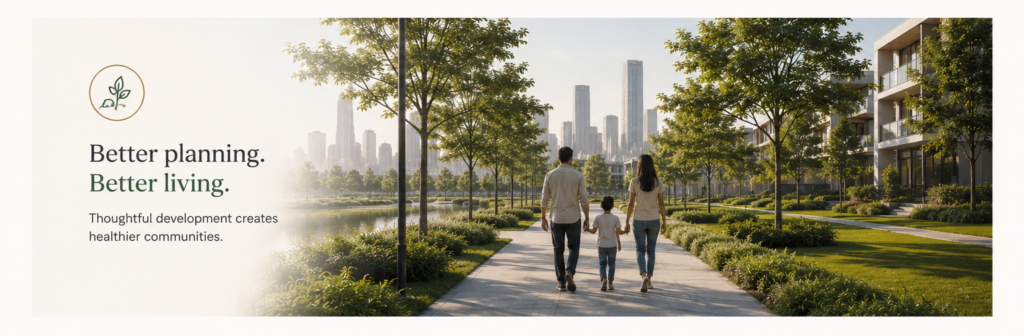
Air quality is equally important. Research from the Harvard T.H. Chan School of Public Health found that improved indoor air quality significantly enhances cognitive performance. Poor ventilation and polluted surroundings can contribute to fatigue, difficulty concentrating, and increased stress. This makes thoughtful planning, proper infrastructure, and environmental considerations essential components of any successful development.
Why Open Spaces Matter
The amount of space people have around them also affects emotional well-being. Overcrowded environments often increase stress levels and create feelings of frustration and mental exhaustion. As urban populations continue to grow, the importance of organized and spacious developments becomes increasingly evident. Wide roads, open areas, and planned infrastructure help create a sense of comfort and freedom that positively impacts everyday life.
The Hidden Impact of Noise Pollution
Noise pollution further influences mental health. Continuous exposure to traffic, machinery, and urban congestion can contribute to sleep disturbances, anxiety, and reduced concentration. Well-planned developments help mitigate these challenges by incorporating better layouts, designated zones, and open spaces that create a more balanced environment.
Greenery Supports Better Mental Health
Humans also share a natural connection with nature. Biologist Edward O. Wilson described this through the Biophilia Hypothesis, which suggests that people are naturally drawn to natural environments. This explains why green spaces, landscaped areas, and tree-lined surroundings contribute to feelings of calmness and relaxation. Research has consistently shown that access to greenery reduces stress while improving productivity and overall well-being.
Better Spaces Improve Productivity
The influence of the environment extends beyond health and into performance. Studies indicate that individuals working or studying in environments with natural light, proper ventilation, and comfortable surroundings tend to perform better than those in poorly designed spaces. Productivity, focus, and creativity are all closely linked to the quality of the surrounding environment.
Why Thoughtful Urban Development Matters
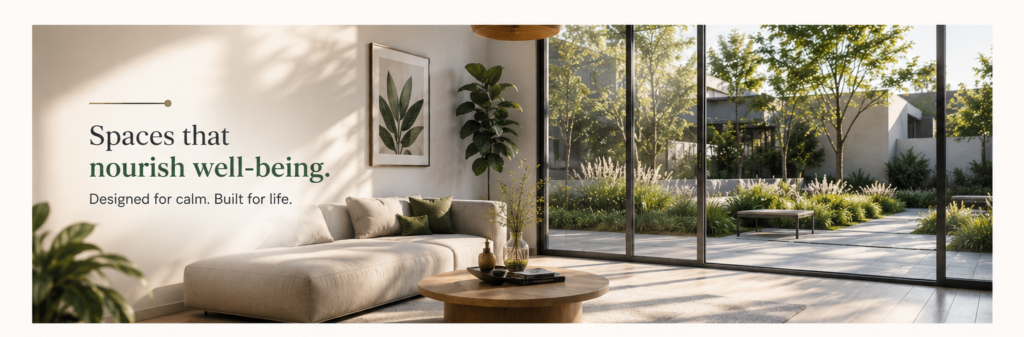
As urbanization accelerates, these factors have become more relevant than ever. Modern cities face challenges such as congestion, pollution, shrinking open spaces, and increasing population density. In this context, responsible development is no longer just about creating physical spaces—it is about creating environments that support healthier and more fulfilling lifestyles.
This is where thoughtful developers play a vital role. At Divine Vision, we believe development goes beyond land creation. A well-planned project lays the foundation for future communities, businesses, and opportunities. By focusing on infrastructure, connectivity, accessibility, open spaces, and sustainable planning, developments can create environments that support both growth and well-being.
The influence of architecture and development is most visible in everyday life. A well-connected location reduces travel stress, open surroundings create a sense of freedom, and thoughtfully planned infrastructure enhances convenience and comfort. These seemingly small details collectively shape the quality of our daily experiences.
Ultimately, architecture is far more than the design of structures, and development is far more than the division of land. Together, they shape how people live, work, interact, and grow. The environments around us quietly influence our emotions, productivity, and overall quality of life. Architecture may shape skylines, but thoughtful development shapes the human experience within them.
Creating Communities That Enhance Lives
The spaces around us influence how we feel, think, and perform every day.
Natural light, clean air, greenery, and open spaces are more than design features—they contribute to lower stress, better focus, and improved well-being.
As cities grow, thoughtful development is essential to creating environments where people and communities can thrive.